Standard epoxy flooring should never be installed on an outdoor patio or lanai on the Treasure Coast because direct solar UV radiation breaks down aromatic epoxy resins, causing severe yellowing, chalking, and delamination within 6 to 12 months. Instead, exterior concrete slabs require 100% aliphatic polyaspartic or polyurea coating systems engineered to withstand intense Florida sunlight, torrential subtropical rain, and high hydrostatic ground moisture.
Why Standard Epoxy Fails on Florida Patios and Lanais
Epoxy is an aromatic polymer resin. The chemical backbone of standard epoxy coatings contains bisphenol-A (BPA) rings that absorb solar ultraviolet radiation.
In outdoor and semi-outdoor environments across Martin, St. Lucie, and Indian River counties, standard epoxy undergoes rapid photo-oxidation. This chemical breakdown triggers three immediate mechanical failures:
- Severe Ambering and Discoloration: Exposure to sunlight alters the optical clarity of the resin. Clear epoxies turn a cloudy, yellowish-brown amber, while pigmented coatings shift color unevenly.
- Chalking and Loss of Gloss: Photochemical degradation breaks the cross-linked surface polymers into a powdery, chalk-like residue. The floor loses its protective sheen, leaving it porous and susceptible to dirt pickup.
- Embrittlement and Micro-Cracking: Solar UV radiation degrades the tensile elasticity of the epoxy matrix. When surface temperatures fluctuate from 70°F during overnight rain to over 135°F under midday Florida sun, brittle epoxy cannot expand and contract with the concrete, leading to micro-cracking and eventual flaking.
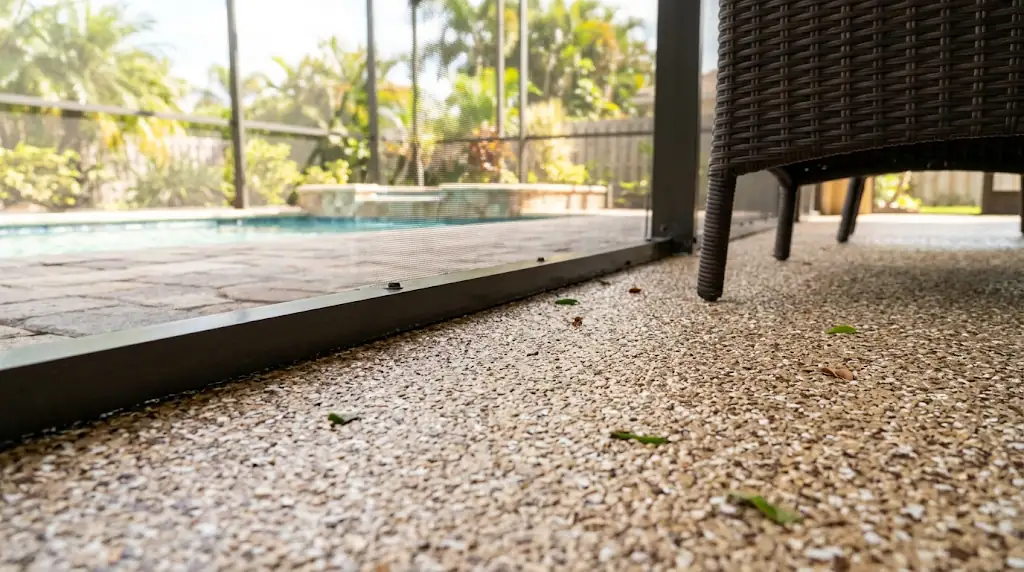
Many homeowners assume screened lanais provide sufficient shade. Standard fiberglass or polyester pool and patio screen mesh filters bug intrusion and minor debris, but it blocks virtually zero ultraviolet radiation. An open-air lanai in Port St. Lucie receives the same level of UV damage as an unsheltered patio slab.
Epoxy vs. Aliphatic Polyaspartic for Outdoor Patios
Exterior concrete surfaces require a completely different chemical approach than interior garage floors. Outdoor installations demand an aliphatic coating system tested under accelerated weathering protocols such as ASTM G154.
| Performance Metric | Standard Epoxy Coating | 100% Aliphatic Polyaspartic System |
| UV Resistance | Fails rapidly (Chalks, turns yellow within months) | 100% UV stable (Zero ambering, zero chalking) |
| Elongation & Flexibility | Rigid (2% to 5% elongation) | Flexible (25% to 100% elongation, absorbs thermal shock) |
| Surface Temperature Tolerance | Softens above 130°F (Sticky in direct sunlight) | Thermally stable above 300°F (Unaffected by patio heat) |
| Water & Rain Resistance | Moisture pooling creates water-spot hazing | Completely waterproof; repels standing rain and pool splash |
| Cure Time to Rain | 24 to 48 hours (Vulnerable to sudden storms) | Fully cured and waterproof in 2 to 4 hours |
| Wet Slip Resistance | Extremely slick when wet (Glass-like surface) | Customizable texture (Embedded polymer or quartz media) |
| Exterior Lifespan | 6 to 18 months before failure | 15+ years under direct Florida solar exposure |
Aliphatic polyaspartic coatings do not contain aromatic chemical rings. Their molecular structure remains unaffected by solar radiation, maintaining crystal-clear gloss and color retention indefinitely.
The Moisture and Heat Dynamics of Coastal Lanais
Exterior patios on the Treasure Coast face extreme weather cycles that challenge coating adhesion:
1. Daily Thermal Cycling
Treasure Coast patio slabs experience wide daily temperature swings. Bare concrete in direct sunlight easily reaches 140°F during summer afternoons in Stuart or Vero Beach, followed by rapid cooling during sudden 3:00 PM thunderstorms.
This creates severe thermal expansion and contraction within the concrete slab. Rigid epoxy coatings shear off the concrete when aggregate moves. Aliphatic polyaspartics possess high elongation properties, expanding and contracting alongside the slab without cracking or popping.
2. High Rain Infiltration and Standing Water
Lanais and open pool decks regularly encounter standing water from seasonal tropical deluges, sprinkler systems, and pool backwashes. Water-based outdoor acrylics and standard epoxies blush, whiten, and soften under standing puddles. Commercial polyaspartic resins form a non-porous, cross-linked barrier that repels water, prevents chemical penetration from pool chlorine, and stops algae and mold spores from embedding into concrete aggregate.
Slip Resistance: Essential Engineering for Wet Outdoor Slabs
Applying an untextured coating to an outdoor patio or pool surround creates an extreme slip-and-fall hazard. Outdoor finishes require aggressive traction engineering to remain safe when wet:
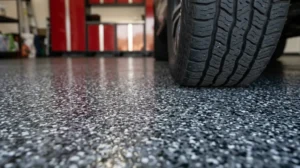
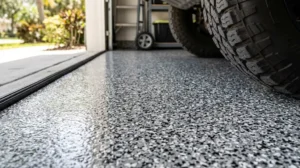
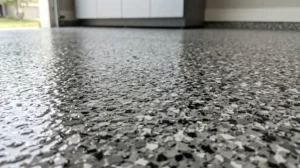
- Full Broadcast Flake System: Broad-coverage vinyl color chips create a natural, multi-directional orange-peel texture across the surface. This physical profile breaks surface tension, providing traction for bare feet and footwear.
- Embedded Polymeric Traction Media: For ultra-smooth looks or clear protective coats over decorative concrete, technicians blend spherical micronized polypropylene beads into the polyaspartic topcoat. These microscopic texturizers add steady grip without turning the surface rough or abrasive to bare feet.
- Aluminum Oxide Additives: For outdoor steps, ramps, or commercial patio dining areas in high-traffic zones, coarse aluminum oxide aggregate delivers commercial-grade friction.
Regional Considerations Across the Treasure Coast
Outdoor slab requirements vary across regional neighborhoods based on soil conditions, sun exposure, and proximity to water:
- Port St. Lucie (Tradition, Lake Whitney, St. Lucie West): High volume of master-planned developments with covered lanais facing wide open lakes or golf courses. These properties experience unshaded western exposure, demanding maximum UV-blocking aliphatic coatings.
- Stuart & Palm City: Riverfront estates along the St. Lucie River encounter constant humidity and wind-driven water off open waterways. Slabs require deep mechanical preparation to strip existing failing acrylic sealers before installing a polyaspartic base.
- Jensen Beach & Hobe Sound: Properties near the Atlantic coastline face intense salt-air fog and wind-blown silica sand. Aliphatic systems resist abrasive sand scouring and prevent salt chlorides from oxidizing underlying concrete rebar.
- Fort Pierce & Vero Beach: Historic residences with older, pitted broom-finished patio slabs require heavy diamond grinding by International Concrete Repair Institute (ICRI) standards to smooth weathered textures and level the floor before applying resin.
4 Steps to Coating an Exterior Patio or Lanai
Installing an outdoor coating that survives Florida weather requires strict mechanical steps:
- Mechanical Grinding: Rotary diamond grinding clears away weathered concrete laitance, dead acrylic sealers, and outdoor mildew, opening a porous ICRI CSP 2 profile.
- Structural Polyurea Crack Repair: Outdoor temperature swings widen surface cracks. Technicians route out fractures and weld them using low-viscosity, fast-curing polyurea that cures stronger than concrete.
- Moisture-Tolerant Base Layer: A specialized, slow-curing polyurea base coat penetrates deep into the slab aggregate, locking the foundation in place.
- Full Flake & Polyaspartic Armor: Vinyl color chips are broadcast to complete rejection, followed by scraping and sealing with a heavy aliphatic polyaspartic clear coat for permanent UV stability and wet traction.
Upgrade Your Outdoor Living Space
Applying interior epoxy to an outdoor slab results in faded colors, yellowing patches, and premature peeling under South Florida’s brutal sun. Port St. Lucie Epoxy Flooring engineers custom polyaspartic outdoor systems built specifically for patios, lanais, and pool surrounds across Port St. Lucie, Stuart, Palm City, Jensen Beach, Vero Beach, Hobe Sound, and Fort Pierce. To transform your outdoor concrete into a UV-stable, slip-resistant surface, request a free on-site estimate through our contact page.