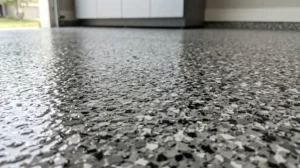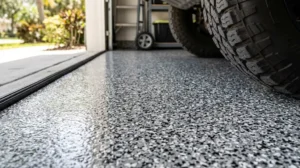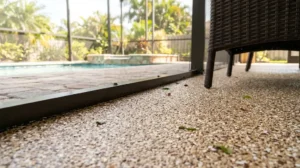
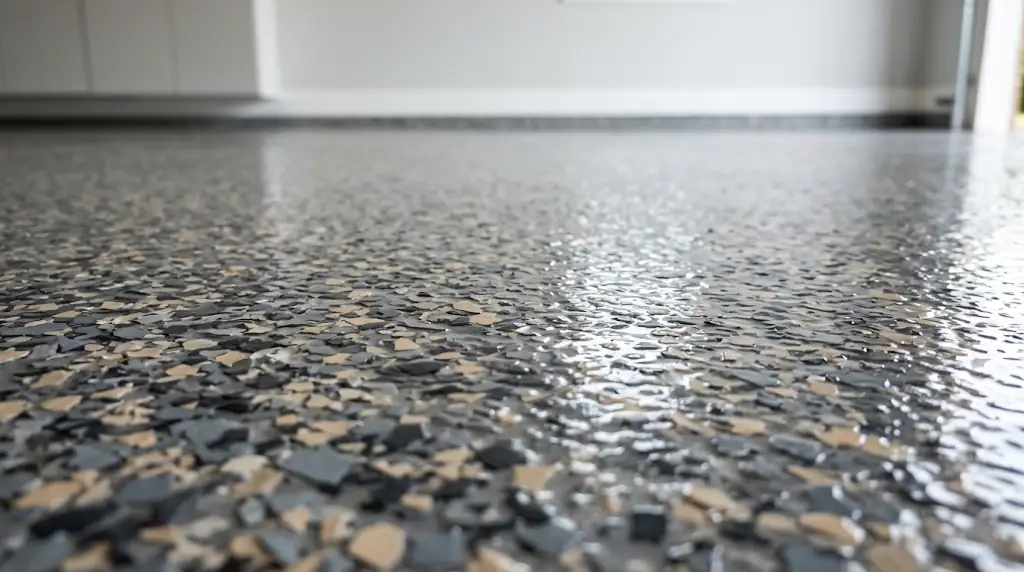
A hybrid system utilizing a 100% solids epoxy moisture-barrier base coat paired with an aliphatic polyaspartic clear topcoat works best for Treasure Coast garages. Pure polyaspartic delivers superior UV stability and hot tire pickup resistance against extreme Florida road heat, while moisture-mitigating epoxy provides the deep capillary penetration and hydrostatic pressure resistance required for coastal concrete slabs.
Direct Comparison: Epoxy vs. Polyaspartic vs. The Hybrid Standard
Choosing between epoxy and polyaspartic is not an either/or decision. Each polymer chemistry serves a dedicated mechanical purpose on a Florida concrete slab:
| Performance Metric | Traditional 100% Solids Epoxy | Pure 2-Coat Polyaspartic | Hybrid System (Epoxy Base + Polyaspartic Top) |
| UV Stability | Poor (Ambers and chalks under sunlight) | Exceptional (100% aliphatic, non-yellowing) | Exceptional (Protected by polyaspartic shell) |
| Tensile Bond to Concrete | Superior (Deep capillary penetration) | Good (Faster cure limits slab penetration) | Superior (>400 psi concrete pull-off strength) |
| Hot Tire Pickup Resistance | Moderate to Low (Softens at 130°F–140°F) | Extreme (Withstands heat up to 300°F) | Extreme (Topcoat isolates tires from base) |
| Abrasion Resistance (ASTM D4060) | 35–45 mg loss (CS-17 wheel, 1,000 cycles) | 12–15 mg loss (CS-17 wheel, 1,000 cycles) | 12–15 mg loss (3x to 4x harder than epoxy) |
| Moisture Vapor Tolerance | Up to 15–20 lbs / 1,000 sq ft MVER | Limited (Typically 3–5 lbs MVER) | Up to 20+ lbs / 1,000 sq ft MVER |
| Return to Vehicle Traffic | 72 to 96 hours | 24 hours | 24 to 48 hours |
| Expected Service Life | 3 to 7 years in coastal FL | 10 to 12 years | 15 to 20+ years |
Why Epoxy Alone Struggles in Coastal Florida Garages
Standard epoxy resins are aromatic polymers. When exposed to natural solar radiation, their molecular chains break down through photo-oxidation. In regions like Port St. Lucie, Stuart, and Vero Beach, sunlight floods into garages through open doors, golf cart garage entries, and side windows.
1. Solar Yellowing and Chalking
Within 12 to 24 months of installation, direct and reflected UV light degrades aromatic epoxy clear coats. The floor turns an amber, cloudy yellow hue. Continued ultraviolet exposure causes the resin matrix to chalk, micro-fracture, and lose surface gloss.
2. Hot Tire Plasticizer Migration
On summer afternoons along the Treasure Coast, road asphalt temperatures reach 140°F to 160°F. Vehicles exiting Interstate 95, Florida’s Turnpike, or US Highway 1 transfer this intense frictional heat directly to garage floors via vehicle tires.
Tire rubber contains petroleum plasticizers to keep tires pliable. When parked hot tires rest on standard epoxy:
- The heat softens the epoxy polymer network.
- Plasticizers migrate into the resin film, creating a chemical bond.
- As the tires cool and contract, the tire pulls the softened epoxy right off the concrete slab.
Why Polyaspartic Alone Is Not a Complete Solution
Polyaspartic is an aliphatic polyurea coating technology developed in the 1990s. While polyaspartic outclasses epoxy in surface toughness and UV performance, using polyaspartic as a standalone direct-to-concrete primer on Florida slabs creates distinct technical risks:
1. Rapid Cure Prevents Deep Capillary Wetting
Polyaspartic coatings cure via a fast reaction between aliphatic polyisocyanates and polyaspartic esters, with working pot-lifes as short as 20 to 30 minutes. Concrete along the Treasure Coast is notoriously dense, damp, and sandy. Epoxy cures slowly over several hours, giving the low-viscosity resin sufficient time to wet out the concrete aggregate and sink deep into the pores opened by mechanical diamond grinding. Fast-setting polyaspartics often bridge over microscopic concrete pores rather than penetrating them, reducing tensile pull-off bond strength (ASTM D4541).
2. Lower Hydrostatic Moisture Tolerance
Standalone polyaspartics do not block significant hydrostatic pressure from shallow water tables. When subterranean vapor emission rates exceed 3.0 to 5.0 lbs per 1,000 square feet, direct-to-concrete polyaspartic coatings blister and debond just like unmitigated epoxy paints.
The Professional Standard: The Multi-Layer Hybrid System
Industrial coating engineers combine the distinct mechanical advantages of both chemistries into a multi-tier installation:
Substrate Preparation (CSP 2–3 Diamond Grind)
  ➔ Tier 1: 100% Solids Epoxy Moisture-Barrier Base (Deep Substrate Bond)
  ➔ Tier 2: Full Broadcast Decorative Vinyl Flake (Impact & Shear Matrix)
  ➔ Tier 3: Aliphatic Polyaspartic Clear Topcoat (UV & Chemical Armor)
- The Foundation (Epoxy Base): A 100% solids, zero-VOC epoxy primer bonds mechanically to the diamond-ground slab. It stops subterranean vapor emissions up to 20 lbs per 1,000 sq ft, sealing the concrete pores and preventing osmotic moisture pressure.
- The Armor Layer (Full Flake Broadcast): Colored vinyl flakes are broadcast to complete rejection, embedding into the wet epoxy base. This layer provides structural thickness (building the system to 25–35 dry mils), absorbs heavy impacts from dropped tools, and builds non-directional slip resistance.
- The Shield (Aliphatic Polyaspartic Topcoat): A heavy clear coat of high-solids polyaspartic encapsulates the flake matrix. This layer resists UV yellowing, stops tire plasticizer migration, repels harsh chemicals (gasoline, brake fluid, battery acid), and cures fast enough for light foot traffic in 4 to 6 hours and full vehicle parking in 24 to 48 hours.
Performance in Treasure Coast Microclimates
Specific environmental conditions across Martin, St. Lucie, and Indian River counties dictate coating performance:
- Port St. Lucie & Fort Pierce: Master-planned residential communities feature high daily automotive commuter traffic on I-95 and Florida’s Turnpike. Polyaspartic topcoats eliminate hot tire pickup caused by extended highway commuting in South Florida summer temperatures.
- Stuart & Palm City: Waterfront lots along the St. Lucie River face severe seasonal hydrostatic ground pressure. Slabs require the heavy, deep-bonding properties of an epoxy moisture primer to stop floor delamination caused by rising river-basin water tables.
- Jensen Beach, Hobe Sound & Vero Beach: Coastal garages subjected to windblown salt spray, sand tracking, and ocean air demand the high abrasion resistance of polyaspartic coatings. Salt chlorides and silica sand scratch standard epoxy finishes within months, whereas polyaspartic retains optical clarity under steady abrasive traffic.
Upgrade Your Garage with Commercial Hybrid Chemistry
Relying on cheap single-chemistry DIY paints leads to peeling, bubbling, and tire marks under Florida’s demanding climate. Port St. Lucie Epoxy Flooring engineers commercial-grade hybrid flooring systems, pairing deep-penetrating epoxy moisture barriers with heavy-duty polyaspartic clear coats throughout Port St. Lucie, Stuart, Palm City, Jensen Beach, Vero Beach, Hobe Sound, and Fort Pierce. To evaluate your slab’s moisture level and get an exact installation estimate, request a consultation through our contact page.